

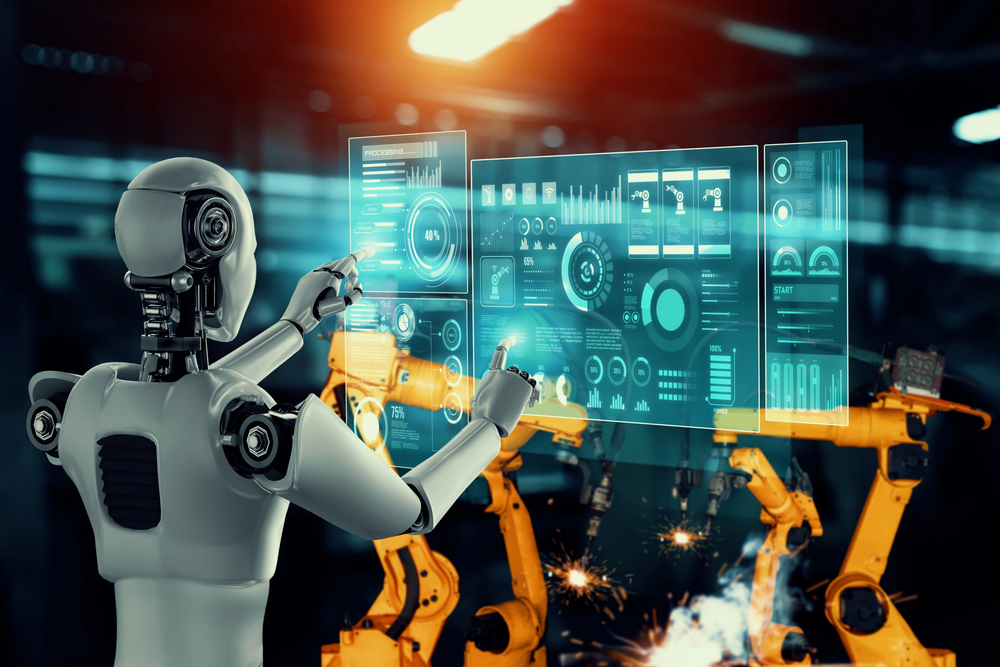
Manufacturing organisations across the US and UK are reaching a clear inflection point in how their production systems are expected to perform. What were once stable, plant-centric IT setups are now under pressure from rising operational complexity, global supply chains, and the demand for real-time visibility across factories.
Most manufacturing environments still rely on a combination of legacy MES, tightly coupled ERP systems, and plant-level SCADA platforms that were designed for a very different operating model. These systems work — but only in isolation. As manufacturers scale, add plants, introduce automation, or respond to market volatility, the limitations become impossible to ignore.
Common symptoms begin to surface:
-
Production data locked within individual plants
-
Limited or delayed visibility into shop-floor performance
-
Manual workarounds to connect MES, ERP, and analytics tools
-
High downtime risk when changes are introduced
-
IT teams spending more time maintaining systems than improving them
In many cases, leadership teams can sense that something is fundamentally misaligned — but the problem isn’t always obvious at first glance. Systems are “running,” reports are being generated, and production continues. The real issue is that the architecture itself no longer supports how modern manufacturing operates.
What used to be acceptable — batch data updates, siloed applications, rigid integrations — now directly impacts operational efficiency, decision-making speed, and competitiveness. Manufacturers are no longer just running factories; they are managing connected production ecosystems that demand responsiveness, scalability, and resilience.
This is the point where manufacturing IT stops being a support function and becomes a strategic constraint.
And it’s precisely at this breaking point that organisations begin to evaluate whether incremental upgrades are enough — or whether a deeper modernisation approach is required.
Why Incremental Fixes No Longer Work in Manufacturing
When manufacturing systems begin to show strain, the first response is often to optimise what already exists. Hardware refreshes, version upgrades, performance tuning, or point-to-point integrations are introduced to stabilise operations. In the short term, these fixes can reduce immediate pain.
But across manufacturing organisations in the US and UK, this approach is increasingly proving insufficient.
The core challenge is not performance alone — it is structural rigidity. Legacy manufacturing systems were designed as tightly coupled environments where MES, ERP, and plant-level systems evolved together. Over time, this creates dependencies that make even small changes risky and slow.
Typical incremental approaches fail because:
-
Upgrading on-prem systems does not improve cross-plant visibility
-
Adding integrations increases complexity without solving data latency
-
Scaling infrastructure remains expensive and inflexible
-
Analytics initiatives stall due to inconsistent or delayed data
-
Every change introduces operational risk on the shop floor
In many cases, manufacturers attempt to “move to the cloud” by lifting and shifting existing systems without rethinking the architecture. While this may reduce infrastructure overhead, it does little to improve agility, resilience, or data usability. A cloud-hosted legacy system still behaves like a legacy system.
The result is a growing gap between what the business expects and what the technology can realistically deliver. Leadership teams expect real-time insight, faster rollout of process changes, and the ability to standardise operations across regions. The underlying systems, however, remain optimised for static, plant-centric operations.
At this stage, incremental fixes stop being a stepping stone and start becoming a constraint. Each additional patch adds complexity, increases maintenance effort, and pushes true transformation further out of reach.
This is where manufacturers begin to recognise that modernisation is not about fixing individual systems, but about redefining how manufacturing applications are designed, connected, and operated — a shift that requires a fundamentally different approach.
What “Modern Manufacturing Systems” Actually Mean Today
The term modern manufacturing systems is often used loosely, covering everything from automation upgrades to analytics dashboards. In practice, modernisation has a much more specific meaning — especially for manufacturers operating at scale across the US and UK.
A modern manufacturing system is not defined by where it is hosted, but by how it is designed and how it operates.
Traditional manufacturing systems were built as large, tightly integrated platforms. MES, ERP, quality systems, and reporting tools shared databases or relied on synchronous, point-to-point integrations. This worked when plants operated independently and change cycles were slow. It breaks down when manufacturers need real-time visibility, cross-plant coordination, and continuous optimisation.
Modern manufacturing systems follow a different set of principles:
-
Decoupled system design
Core functions such as production execution, planning, quality, and analytics operate as independent services rather than a single monolith. -
Event-driven data flows
Machine events, production updates, and quality signals are streamed in near real time instead of being processed in batches. -
Unified data without centralised control
Data is accessible across plants and business units without forcing all systems into a single database or vendor platform. -
Operational resilience by design
Systems are designed to tolerate failures, scale dynamically, and continue operating even when individual components degrade. -
Change without production disruption
New features, integrations, and process changes can be introduced incrementally without shutting down the shop floor.
Importantly, modernisation does not require replacing every manufacturing system at once. Most organisations modernise progressively, allowing legacy MES or ERP platforms to coexist while new cloud-native capabilities are introduced around them.
This shift changes the role of manufacturing IT. Instead of acting as a bottleneck that limits how quickly the business can respond, technology becomes a flexible layer that supports continuous improvement.
Understanding this distinction is critical, because it frames cloud not as a destination, but as the foundation that enables modern manufacturing systems to function effectively at scale.
The Role of Cloud in Manufacturing Modernisation
Cloud technologies play a critical role in manufacturing modernisation, not because they replace factory systems, but because they solve the structural limitations that traditional manufacturing IT cannot address on its own.
Manufacturing environments are inherently distributed. Plants operate across regions, production lines generate continuous streams of machine data, and operational decisions often depend on visibility beyond a single site. Traditional on-premise architectures struggle to support this level of scale and variability.
Cloud provides a foundation that aligns naturally with how modern manufacturing operates.
At a practical level, cloud enables manufacturers to:
-
Separate compute, storage, and applications so systems can scale independently
-
Centralise data access while allowing plant-level systems to operate autonomously
-
Support hybrid and edge patterns, where real-time control remains on-site and analytics run centrally
-
Deploy changes faster without impacting live production systems
-
Operate across regions with built-in redundancy and resilience, critical for US and UK manufacturing footprints
More importantly, cloud shifts how manufacturing systems are built and evolved. Instead of designing systems around fixed infrastructure constraints, teams can focus on capability-driven architecture — building services that respond to production needs, not hardware limits.
Cloud also creates a common platform for connecting operational technology (OT) with enterprise IT. Machine data, production events, and quality signals can be securely ingested, processed, and analysed in near real time, enabling insights that were previously difficult or impossible to achieve with on-premise systems alone.
It’s important to note that cloud adoption in manufacturing is rarely “all or nothing.” Most successful modernisation initiatives use a hybrid approach, keeping latency-sensitive control systems on the shop floor while leveraging cloud for orchestration, visibility, analytics, and integration.
In this context, cloud is not the end goal. It is the operating layer that allows manufacturing systems to become more adaptable, observable, and resilient — qualities that are now essential for competitive manufacturing operations.
A Practical Architecture for Modern Manufacturing Systems
Modernising manufacturing systems requires more than migrating applications to the cloud. It requires an architecture that can support real-time operations, continuous change, and plant-level reliability without introducing unnecessary complexity.
A practical modern manufacturing architecture is built around clear separation of concerns, allowing production systems to evolve independently while remaining connected.
At its core, this architecture typically includes the following layers:
Cloud-Native App Layer
Manufacturing capabilities such as production tracking, quality management, scheduling, and reporting are designed as independent services instead of a single monolithic system. This allows individual functions to scale, evolve, or be replaced without impacting the wider manufacturing environment. Containerisation and orchestration platforms ensure consistent deployment, resilience, and controlled rollout of changes across environments.
Event-Driven Data Backbone
Modern manufacturing systems rely on event-driven data flows rather than batch updates or tightly coupled integrations. Machine events, production milestones, and operational signals are captured and streamed in near real time. This enables immediate shop-floor visibility, decoupled MES and ERP integrations, and reliable data movement without disrupting production processes.
Hybrid and Edge Integration
Latency-sensitive workloads such as machine control and real-time execution remain close to the factory floor. Edge components manage local processing, buffering, and failover to ensure uninterrupted operations. Cloud services act as the coordination and intelligence layer, aggregating data across plants while maintaining local autonomy where required.
Unified Data and Analytics Layer
Operational data from MES, ERP, quality systems, and equipment is standardised and made accessible for analytics without forcing consolidation into a single central system. This unified data layer supports cross-plant performance comparison, predictive maintenance, and operational forecasting while preserving system independence.
Security and Reliability by Design
Security is embedded across all architectural layers with strict separation between OT and IT environments, encrypted data flows, and workload isolation. High availability, fault tolerance, and disaster recovery are built into the design, ensuring manufacturing systems remain resilient across regions and operational scenarios.
Progressive Modernisation Enablement
The architecture supports gradual modernisation rather than large-scale replacement. Legacy systems continue operating while new cloud-native capabilities are introduced incrementally around them. This reduces operational risk, avoids production disruption, and allows manufacturers to modernise at a pace aligned with business priorities.
This architectural approach allows manufacturers to modernise progressively. Legacy systems can remain operational while new capabilities are introduced around them, reducing risk and avoiding large-scale disruption.
Most importantly, it creates a foundation that supports continuous improvement — enabling manufacturing organisations to adapt as processes, technologies, and market conditions evolve.
Modernising Core Manufacturing Systems | Step-by-Step View
Manufacturing modernisation rarely follows a single, linear path. Most organisations operate a mix of legacy and modern systems, and any transformation effort must prioritise production continuity above all else.
A successful approach focuses on modernising capabilities, not replacing systems outright.
Step 1: Stabilise and Isolate Critical Production Systems
The first priority is identifying which systems are mission-critical to shop-floor operations. Legacy MES, SCADA, and control systems are stabilised and isolated so they can continue operating reliably while modernisation progresses around them.
This reduces risk and creates a clear boundary between systems that must remain unchanged and those that can evolve.
Step 2: Decouple Manufacturing Systems from Rigid Dependencies
Tightly coupled integrations between MES, ERP, and reporting systems are gradually replaced with asynchronous, event-based interfaces. Production events are published once and consumed by multiple downstream systems without direct dependencies.
This step alone often unlocks significant flexibility and visibility.
Step 3: Introduce Cloud-Based Coordination and Visibility
Cloud services are introduced as a coordination layer rather than a replacement for plant systems. This layer aggregates production data, supports cross-plant visibility, and enables standardised reporting without interfering with local execution.
Manufacturers begin to gain real-time insight across sites while keeping control close to the factory floor.
Step 4: Modernise ERP Integration Without Disrupting Operations
ERP systems are modernised by decoupling them from real-time production execution. Instead of direct, synchronous calls, ERP platforms consume validated production events, reducing latency and improving reliability.
This allows ERP upgrades or migrations to proceed independently of manufacturing operations.
Step 5: Enable Advanced Analytics and Predictive Capabilities
With reliable, near real-time data flowing into the cloud, manufacturers can introduce analytics, machine learning, and predictive maintenance capabilities incrementally.
These capabilities build on the modernised architecture rather than competing with existing systems.
Step 6: Standardise and Scale Across Plants
Once the approach is proven in one facility, the same patterns can be replicated across additional plants. Standardisation at the architecture level allows local flexibility while maintaining global visibility and governance.
This step-by-step approach avoids “big-bang” replacements and aligns modernisation with operational realities — a critical factor for manufacturers operating complex environments across the US and UK.
Operational Outcomes Manufacturing Leaders Actually Care About
Modernising manufacturing systems is ultimately judged not by architectural elegance, but by the operational impact it delivers. For manufacturing leaders across the US and UK, success is measured in visibility, reliability, and the ability to respond quickly to change.
When cloud technologies are applied with the right architectural approach, the outcomes become tangible.
Real-Time Production Visibility
Manufacturers gain near real-time insight into production performance across lines, plants, and regions. Instead of relying on delayed reports or manual data consolidation, operational teams can monitor throughput, quality metrics, and bottlenecks as they occur.
This level of visibility enables faster intervention and more informed decision-making.
Reduced Downtime and Operational Risk
Decoupled systems and event-driven integration reduce the risk that changes in one area will disrupt production elsewhere. Failures are isolated, recovery is faster, and maintenance activities can be planned with greater confidence.
Over time, this leads to measurable reductions in unplanned downtime.
Faster Standardisation Across Plants
Cloud-enabled coordination makes it easier to roll out process improvements, quality standards, and reporting models across multiple facilities. Best practices developed in one plant can be replicated elsewhere without extensive rework.
This is particularly valuable for manufacturers operating multiple sites across geographies.
Improved Responsiveness to Market and Supply Chain Changes
With unified, timely data, manufacturers can respond more quickly to demand fluctuations, supply constraints, or regulatory changes. Planning and execution are better aligned, reducing the gap between strategic decisions and operational reality.
A Platform for Continuous Improvement
Perhaps most importantly, modernised manufacturing systems create a foundation for ongoing optimisation. Advanced analytics, predictive maintenance, and automation initiatives can be introduced incrementally without destabilising core operations.
These outcomes shift manufacturing IT from a cost centre to a strategic enabler — supporting operational excellence today while preparing organisations for future demands.
Security, Reliability & Compliance in Cloud Manufacturing
For manufacturing organisations, especially those operating across the US and UK, concerns around security, reliability, and compliance are not secondary considerations — they are prerequisites. Any modernisation effort that introduces operational risk or regulatory uncertainty is unlikely to move forward.
Cloud-based manufacturing architectures address these concerns not by removing controls, but by strengthening them through design.
Security Across OT and IT Boundaries
Modern manufacturing environments require secure interaction between operational technology (OT) and enterprise IT systems. Cloud architectures enable controlled data exchange using clearly defined interfaces, reducing the need for direct system access.
Key security principles include:
-
Segmented network design between plant systems and cloud services
-
Encrypted data flows from machines to analytics platforms
-
Identity-based access controls for applications and users
-
Continuous monitoring and auditability across environments
This approach reduces the attack surface while maintaining operational flexibility.
High Availability and Fault Tolerance
Manufacturing systems must remain operational even when individual components fail. Cloud-native designs use redundancy, automated recovery, and regional isolation to ensure resilience.
For manufacturers with distributed operations, this means:
-
Production data remains available even during local outages
-
Failures are contained without cascading across systems
-
Recovery processes are tested and repeatable
Reliability is built into the platform rather than added as an afterthought.
Disaster Recovery and Business Continuity
Cloud-based architectures simplify disaster recovery by decoupling data, applications, and infrastructure. Manufacturing organisations can define recovery objectives aligned to operational priorities and test them regularly without disrupting production.
This is particularly critical for organisations operating multiple plants or serving regulated markets.
Compliance Without Operational Burden
Manufacturers must often comply with industry, regional, and customer-specific requirements. Cloud platforms provide standardised controls, logging, and reporting capabilities that support compliance without extensive custom development.
By embedding compliance into the architecture, organisations reduce manual effort while improving consistency and traceability.
Addressing security, reliability, and compliance at the architectural level builds confidence across stakeholders — from plant managers to executive leadership — and removes one of the most common barriers to cloud adoption in manufacturing.

| Area | Insight | Why This Matters for Manufacturing Modernisation |
|---|---|---|
| Cloud adoption in manufacturing | ~55–60% of manufacturers actively use cloud in core operations | Cloud is no longer experimental; modernisation decisions are now about how to use cloud effectively, not whether to adopt it |
| Cloud leaders outperform peers | Advanced cloud adopters report ~40%+ higher ROI than early-stage adopters | Architecture and execution maturity directly impact business outcomes |
| Hybrid cloud dominance | 70%+ enterprises operate hybrid cloud environments | Validates hybrid and edge-first approaches for factories where latency and uptime matter |
| Downtime impact | Unplanned downtime costs manufacturers ~$50B annually | Reinforces why real-time visibility and resilient system design are critical |
| Data utilisation gap | Only ~20–30% of manufacturing data is actively analysed | Highlights the upside unlocked by cloud-based data unification and analytics |
| OT–IT integration challenge | Over 60% of manufacturers cite OT–IT integration as a top challenge | Justifies decoupled, event-driven architectures over tight system coupling |
| Analytics & AI readiness | Fewer than 25% of manufacturers consider their data AI-ready | Shows why modernisation must start with data foundations before advanced use cases |
| Change cycle speed | Cloud-native teams release changes 2–3× faster | Explains why legacy MES and ERP upgrade cycles limit responsiveness |
| Security reality | Most security incidents originate from legacy system misconfigurations | Counters the assumption that cloud increases risk in manufacturing |
| Multi-plant standardisation | Cloud-enabled manufacturers reduce rollout time by 30–40% | Demonstrates operational gains for multi-site US and UK manufacturing environments |
How Euphoric Thought Helps Manufacturers Modernise with Confidence
Modernising manufacturing systems is as much an execution challenge as it is a technical one. Success depends on understanding manufacturing operations, respecting production constraints, and applying cloud technologies in a way that delivers value without disruption.
This is where Euphoric Thought focuses its approach.
Rather than starting with tools or platforms, the engagement begins with architecture and operating context. Manufacturing systems are assessed in terms of how they support production workflows, data flow, and decision-making — not just how they are implemented technically.
Euphoric Thought works with manufacturers to:
-
Design cloud-native and hybrid architectures aligned to real production needs
-
Modernise MES, ERP, and legacy systems incrementally, without big-bang replacements
-
Enable secure OT–IT integration while maintaining plant-level autonomy
-
Build scalable, event-driven data platforms for real-time visibility
-
Support multi-plant and multi-region operations common in US and UK enterprises
The emphasis is always on operational continuity. Changes are introduced in a controlled manner, validated against production realities, and scaled only once proven.
By combining deep architectural thinking with practical delivery experience, Euphoric Thought helps manufacturers move beyond short-term fixes and build systems that can evolve with their business — supporting efficiency today while enabling continuous improvement in the future.